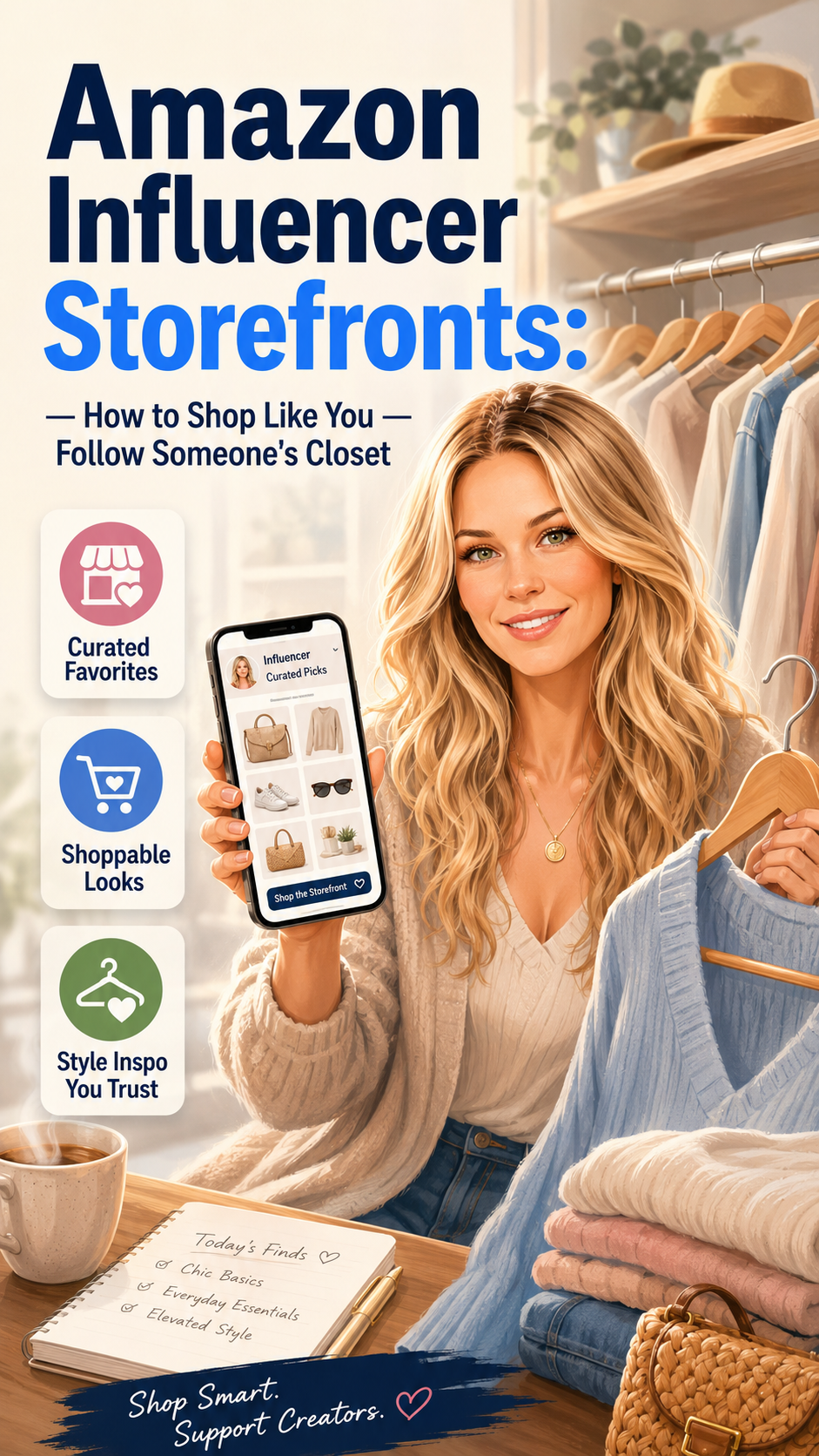
Amazon Influencer Storefronts: How to Shop Like You Follow Someone's Closet
There's a version of Amazon where the algorithm isn't guessing what you want — a real person already picked it for you. Here's how to find it, use it, and shop it like you're raiding a friend's closet.
This post contains affiliate links — we may earn a small commission at no extra cost to you.
Okay, so you know how sometimes you see someone's outfit — on Instagram, on TikTok, wherever — and you think, I need every single thing she's wearing? There's an actual feature for that. It's called an Amazon Influencer Storefront, and once you know it exists, regular Amazon search is going to feel like grocery shopping without a list.
What an Influencer Storefront Actually Is
Amazon lets approved creators build their own curated shop-within-a-shop — a page that's entirely their picks, organized however they want. Outfits. Home finds. "Things I actually rebuy." It's not the algorithm serving you "customers also bought." It's a real person saying this, specifically, this one.
Every storefront lives at its own URL (usually amazon.com/shop/theirhandle), and it's built entirely out of products the creator has personally selected and organized into idea lists — think of them like curated shelves.
How to Actually Find Them
Most people stumble onto storefronts through a creator's bio link. But you can also browse Amazon's own shopping discovery hub, which surfaces curated lists and storefronts by category — beauty, home, fashion — if you don't already have a specific creator in mind.
Once you're on someone's storefront, look for how they've organized it. Most split things into idea lists like "Fall Capsule," "Amazon Finds " or "Things In My Cart Right Now." That structure is the whole point — you're not scrolling a catalog, you're browsing someone's actual shelves.
How to Shop It Like a Closet, Not a Catalog
The trick is treating a storefront the way you'd treat a real closet you're borrowing from — you don't buy the whole thing, you pull the pieces that fit your life.
- Start with the list titles, not the products. A "Capsule Wardrobe" list tells you more about fit and versatility than any single item description will.
- Look at when it was last updated. Storefronts get stale fast if a creator isn't maintaining them — an "updated" stamp (when visible) tells you whether you're looking at current picks or a list from two seasons ago.
- Cross-shop 2–3 storefronts in the same category before buying. If three different creators all landed on the same cozy knit cardigan or the same ceramic diffuser, that's a stronger signal than any star rating.
Why This Beats Regular Amazon Search
Amazon's search results are optimized for relevance and ad spend — which is a nice way of saying the top result isn't always the best one, it's the one that paid to be there or matched your keywords loosely. A storefront skips that entirely. Someone tried the thing, liked it enough to feature it, and organized it next to other things they also trust. That's curation you can't fake with a five-star average.
Amazon shopping doesn't have to mean scrolling for twenty minutes and still not trusting what you clicked "add to cart" on. Find a couple of storefronts in categories you actually shop — beauty, home, whatever — and let someone else do the sifting for once.