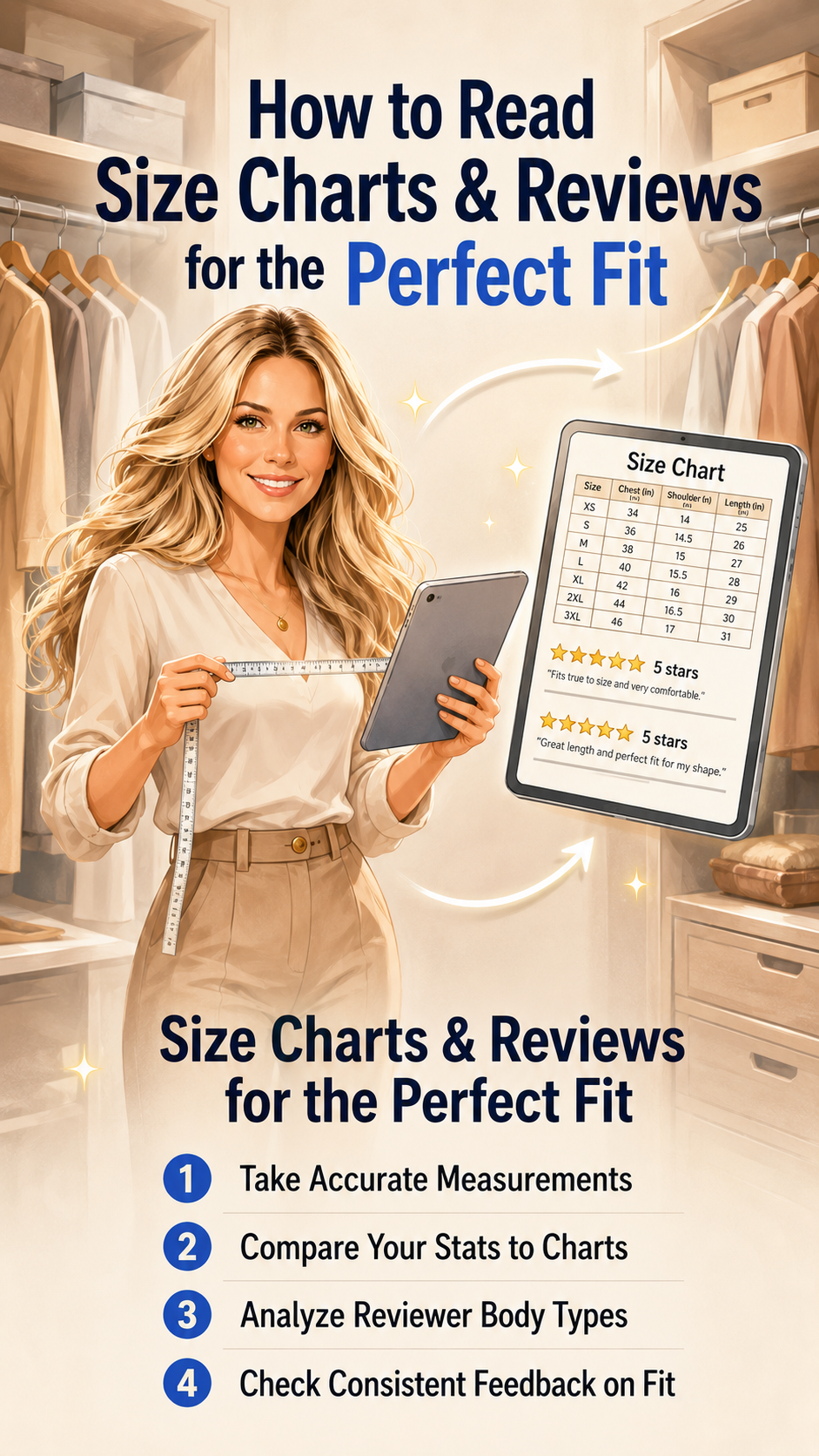
How to Read Size Charts & Reviews for the Perfect Fit
Returns are how most people handle online sizing. But they're avoidable. Here's how to measure correctly, read size charts that actually mean something, and use reviews the way they were meant to be used.
This post contains affiliate links — we may earn a small commission at no extra cost to you.
The number one reason people return clothing purchased online is fit. Not quality, not color — fit. Most of those returns are avoidable if you know how to read the information that's already there before you buy. Size charts and review sections together give you almost everything you need to make a confident call.
Measure Yourself First (Once, Correctly)
You cannot use size charts without accurate measurements. The system only works if you know your actual numbers. Take three measurements:
- Bust: Measure around the fullest part of your chest, keeping the tape parallel to the floor. Don't pull it tight; you want the tape snug but not compressing.
- Waist: Measure around your natural waist — typically the narrowest part of your torso, roughly an inch above your belly button. Not where your pants sit.
- Hips: Measure around the fullest part of your hips and seat, usually about eight inches below your natural waist.
Write these down. Keep them somewhere accessible (notes app is fine). You'll use them constantly. Inseam is worth measuring too if you shop pants frequently — measure from the crotch seam to the floor while standing barefoot.
How to Read Amazon Size Charts
Amazon's size charts are on individual product pages, usually under the "Size Chart" link near the size selector. Always open it. Don't assume your standard size translates — especially for international brands, which measure sizes completely differently.
Size charts list garment measurements or body measurements — and these are different things. A garment measurement tells you the actual dimensions of the clothing. A body measurement tells you the body size the garment is intended to fit. Some charts list both. When in doubt, look for body measurements and compare to yours directly.
The key question to ask: where do my measurements land on this chart, and if I'm between sizes, which direction do I round? For tops and dresses with structure (blazers, fitted dresses), size up. For relaxed or stretchy fits, true-sizing or even sizing down is often better. The listing photos and fabric description help you read whether the garment runs structured or relaxed.
Using the Review Section for Fit Information
The review section on Amazon clothing listings is one of the most underused fit tools available. Reviewers regularly include:
- Their height and weight alongside what size they ordered
- Notes on whether the item runs small, large, or true to size
- Body type descriptions (petite, curvy, straight) and how the fit worked for them
- Photos — often the most useful information of all
Filter reviews by star rating and look for the ones that include fit commentary. The most useful reviews for sizing are 3-star reviews from people who liked the product but had a fit issue — they describe both the problem and what they would have done differently.
The Photo Review Strategy
Always scroll to photo reviews on clothing and shoe listings. Reviewer photos show:
- Real-world color vs. listing photos (which are often heavily edited)
- How the fabric drapes and sits on an actual body
- Length on different heights (pay attention to reviewer-mentioned heights)
- Fit through the waist, hips, and shoulders — the parts that matter most
Look for reviewers with similar measurements to yours and see how the item fits them. This is more useful than any size chart for items with limited fit data.
The Questions Section
The Q&A section below the reviews is worth checking too. Other buyers have already asked the questions you have. "Does this run small?" "What size did you order if you're normally a medium?" "Is the waistband stretchy?" — these answers are often there. If they're not, you can ask and sellers or other buyers will usually respond within a day or two.
Red Flags to Watch For
- No size chart at all. If a clothing listing doesn't have a size chart, that's a gap in information you can't fill. Proceed with extra caution and verify the return policy before buying.
- Wildly inconsistent review sizing. If reviews mention everything from "ordered my true size and it fit" to "ordered two sizes up and it was still tight," the item has a consistency problem. That's a quality control issue, not a sizing issue — and it's a real risk.
- Only one or two reviews on a clothing item. Not enough data to draw sizing conclusions. Either wait for more reviews or be prepared to return.
Shoes: The Same Logic, Different Details
Shoe size charts on Amazon typically include US, EU, and UK sizing plus foot length in centimeters. Measure your foot length by placing it on a piece of paper, marking the heel and longest toe, and measuring the distance. Compare to the size chart — don't assume your US size translates to international brands.
Review sections for shoes always include whether they run narrow, wide, or true. If you have wide feet, this is non-negotiable information. Look for reviewers who mention width specifically. Shop women's shoes on Amazon.
Taken together — your measurements, the size chart, and the review section — you have more fit data than you'd get trying something on in most retail dressing rooms. Use all of it.